
Every year, ABIM, the Annual Biocontrol Industry Meeting, brings together the international biocontrol community in Basel: companies, researchers, technical experts, decision-makers and supply chain operators meet to present new solutions, discuss market opportunities, regulatory updates and perspectives for sustainable crop protection. In this international context, what does innovation mean for BIOGARD? Through the perspective of Andrea Iodice, Head of BIOGARD’s R&D Area, innovation is not only about new products, but also about more integrated strategies, technical expertise and solutions capable of delivering concrete value in the field.
The interview
Which innovation has had the greatest impact on biocontrol in recent years?
The most significant innovation has been the shift from viewing biocontrol as an alternative option to recognizing it as a core component of crop protection strategies. This is one of the key messages emerging from international events such as ABIM. Today, innovation is not limited to the discovery of new active substances or beneficial organisms; it also depends on the ability to develop integrated, preventive and targeted programs. Semiochemicals, microorganisms, substances of natural origin, beneficial insects, nematodes, monitoring systems, services and electronic tools must be combined within a coherent technical strategy. In this way, biocontrol expresses its full potential: not as a simple replacement, but as a structured approach to crop protection design.
How is BIOGARD positioned in today’s biocontrol market?
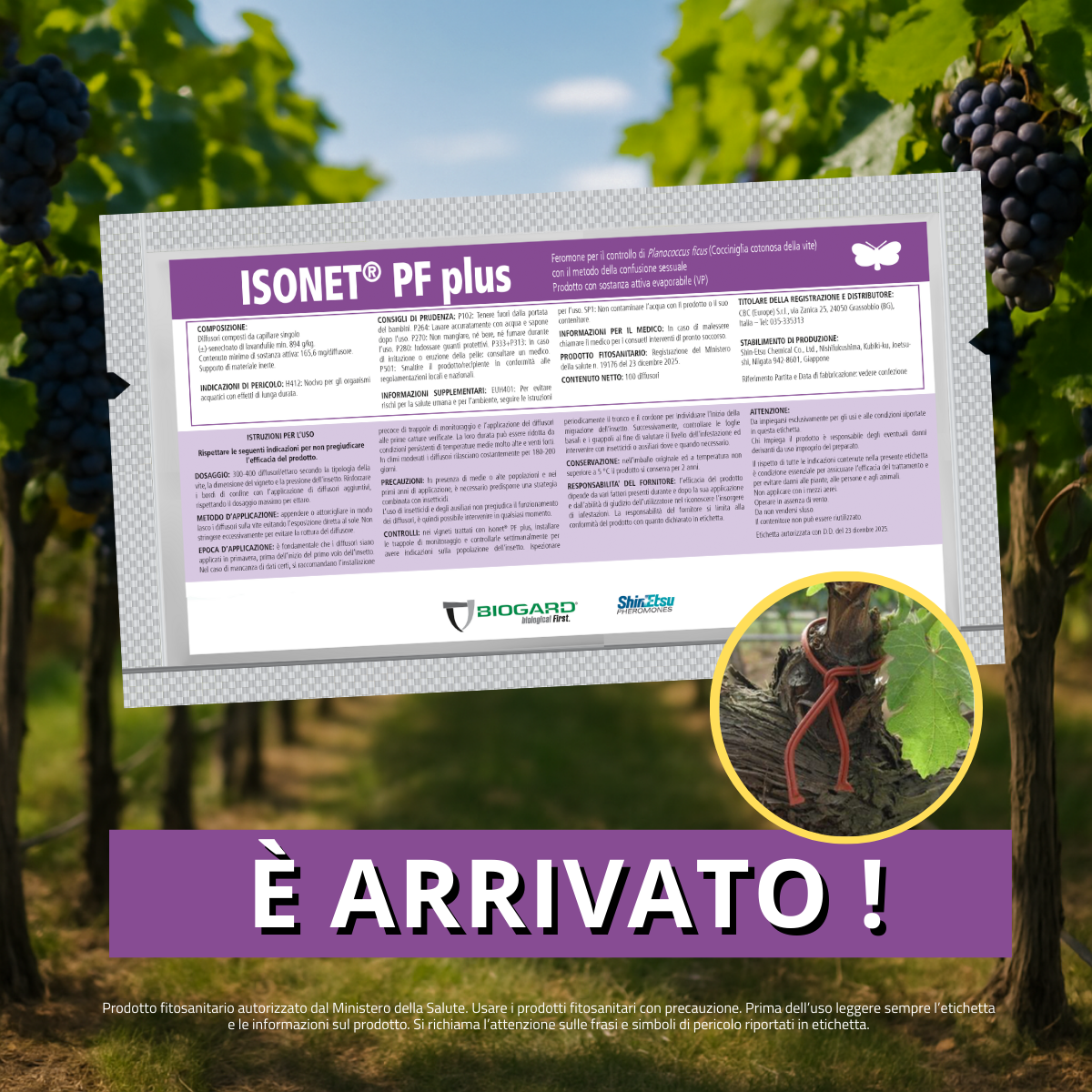
BIOGARD is positioned as a specialized technical player in agricultural biocontrol, with a broad portfolio designed for integrated crop protection programs. Its presence at ABIM reflects this role: the event is a key platform for monitoring innovation, applied research, regulatory developments and the practical implementation of biological solutions. BIOGARD’s technical value is based on the integration of multiple tools — mating disruption pheromones, beneficial insects and mites, microbiological and botanical products, monitoring systems, entomopathogenic nematodes, biostimulants and nutritional specialties — into crop- and area-specific programs. The objective is to translate biological solutions into reliable field strategies, adapted to pest pressure, crop phenology, application timing and growers’ operational needs.
What will be the next major innovation in biocontrol?
The next major innovation will probably be the increasingly close integration between biocontrol, data, precision agriculture and robotics. The future will not be shaped only by new products, but by more advanced decision-making systems: digital monitoring, forecasting models, more timely applications and tailor-made strategies. In this scenario, biocontrol will be able to fully express its potential, because many biological solutions perform best when used preventively and at the right time.
How do you imagine agriculture in 2035?
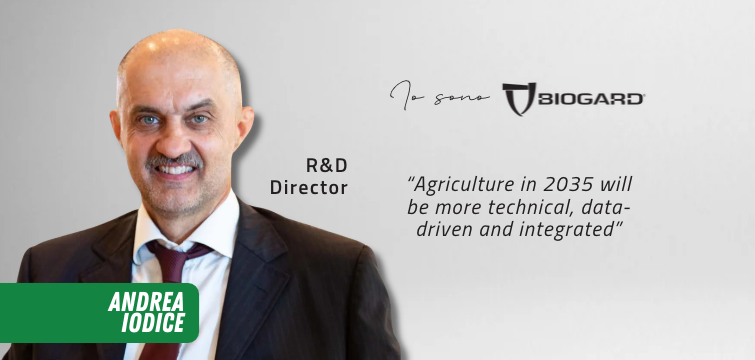
Agriculture in 2035 will be more technical, data-driven and integrated. Sustainability will be a standard operating requirement, not an optional target. Farms will need effective, authorized and reliable tools, compatible with supply chain requirements, regulatory constraints and consumer expectations. Biocontrol will have a stronger role, but only if supported by technical expertise, field monitoring, decision-support systems and correct application timing. The key innovation will be the integration of biology, digital technologies and agronomic knowledge to manage crop protection with greater precision and consistency.
If you had to summarize the future direction of biocontrol in one sentence, what would it be?
The future of biocontrol will be strategic: crop protection will be designed around prevention, sustainability and field expertise, not only as a response to specific problems.